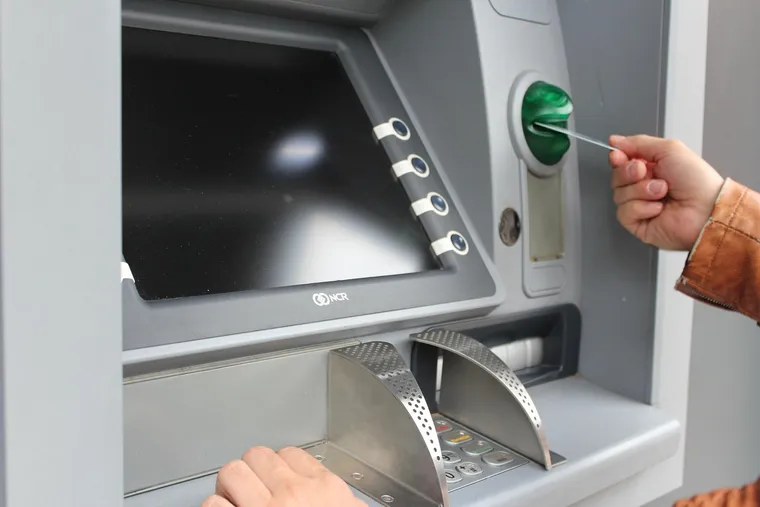
If you search for a Bitcoin ATM in Israel, most of what comes up is news from 2014. Here is the current picture. As of October 2026 a single network operates in the country: Bitcoin Change (ביטקוין צ׳יינג׳), with 11 staffed branches. According to the operator, each branch has a two-way Lamassu machine, so you can feed in shekel notes and receive coins, or send coins and walk out with cash. We found no other active ATM operator in Israel, and the Bits of Gold machine that opened in 2014 is history.
Because there is one operator, the fee, the limits and the ID rules are identical everywhere; only the address and the opening hours change. This guide lists both, shows what a purchase really costs, and covers your options when the nearest machine is far away. For the wider picture of paying cash for crypto, including Israel's cash law, see buying bitcoin with cash in Israel.
Map of Bitcoin ATMs in Israel
The map marks every city with its own page on this site. Green means a branch with a machine, orange means appointment only, and blue means there is no point in town; hover or tap to see the nearest one. Clicking a city opens its page with the address, directions and online alternatives.
Coverage is concentrated in the centre. Gush Dan has three points: Tel Aviv, Ramat Gan and Rishon LeZion. Jerusalem, a city of more than a million people, has one, as do Haifa and Netanya. In the north there are branches in Afula, Karmiel and Ein Shemer, a roadside complex near Route 65 that serves Hadera, Pardes Hanna and Wadi Ara. In the south there is Beer Sheva, plus Eilat by appointment. These are all 11 points, with addresses and phone numbers as published by the operator:
Opening hours: Sunday to Thursday, plus Friday morning
Every branch follows the Israeli working week: open Sunday to Thursday and on Friday morning, closed on Shabbat. What differs is closing time. Some branches close at 19:00, others at 20:00, and Ein Shemer stays open until 21:00. Friday matters even more: Ramat Gan closes as early as 13:00, while Beer Sheva and Karmiel stay open until 15:00. Before Jewish holidays, phone ahead, as hours may change.
| City | Address | Sun–Thu | Fri | Phone |
|---|---|---|---|---|
| Tel Aviv | King George St 50 | 10:00–20:00 | 09:00–14:00 | 03-9181167 |
| Jerusalem | Jaffa St 151 | 10:00–19:00 | 09:00–14:00 | 02-5342313 |
| Haifa | Horev St 18 | 10:00–20:00 | 09:00–14:00 | 04-6951035 |
| Ramat Gan | Tuval St 36 | 10:00–19:00 | 09:00–13:00 | 03-5362643 |
| Rishon LeZion | Rothschild St 1 | 10:00–19:00 | 09:00–14:00 | 03-5334963 |
| Netanya | Sha’ar HaEmek St 3 | 10:00–19:00 | 09:00–14:00 | 09-7934808 |
| Beer Sheva | Yitzhak Rager Blvd 53 | 10:00–20:00 | 09:00–15:00 | 08-8506955 |
| Afula | Menachem Begin Blvd 72 | 10:00–19:00 | 09:00–14:00 | 04-8451639 |
| Ein Shemer | Alon complex (Route 65) | 10:00–21:00 | 09:00–14:00 | 04-6990995 |
| Karmiel | Dabach Mall complex | 10:00–20:00 | 10:00–15:00 | 04-9533493 |
| Eilat | HaTmarim Blvd 4 | Appointment | WhatsApp 051-5466714 | 08-9707178 |
Hours as shown on bitcoinchange.co.il on 5 October 2026. OpenStreetMap lists longer hours for Tel Aviv; we use the operator’s figures. Saturday: all branches closed.
What it costs: a 7% fee each way
Bitcoin Change charges 7% to buy and 7% to sell. The underlying rate comes from the Kraken exchange, which the machines are connected to: a screen in the branch shows the market rate, and the machine shows the shekel price including the fee. The operator's own worked example is simple. Put in ₪100 and you receive bitcoin worth ₪93. To withdraw ₪100 in cash, you send bitcoin worth ₪107. There is no extra foreign-exchange charge.
Scaled up, ₪1,000 in cash buys bitcoin worth ₪930. At a reference price of about ₪262,130 per bitcoin (Kraken, 5 October 2026), that is roughly 0.00355 BTC. If you buy and later sell through the same machine, the round trip costs about 14%. The fee went up from 6% to 7% in 2026, which the operator calls its first change in ten years, so older maps and directories may still show 6%.
So why pay more? The ATM buys you two things: you can buy without a bank transfer, and someone in the branch can walk you through it the first time. It does not buy anonymity, because you show two IDs. If you buy a fixed amount every month and have an Israeli bank account, a bank transfer to a licensed Israeli platform will usually be cheaper. If you just want to buy quickly from your phone, you can pay by credit or debit card.
Limits, ID and supported coins
ID. On your first visit bring two valid ID documents: an Israeli ID card plus a passport or driving licence. Staff photograph both, and you fill in a short "getting to know you" questionnaire, which the operator says is required under the Israel Money Laundering and Terror Financing Prohibition Authority's rules. Later visits are quicker.
Coins. To buy: BTC, ETH, BCH and USDT. For selling, the operator's site contradicts itself: the homepage lists BTC, ETH and BCH only, with ETH on ERC-20 only, while the FAQ adds USDT. If you are going in to sell USDT, ask first. The only thing that comes out of the machine is Israeli shekel cash. You also need a wallet on your phone; staff can help you set one up. If you plan to hold a meaningful amount, read our guide to crypto wallets.
The cash law. Under Israel's Law for the Reduction of the Use of Cash, a cash payment to a business is capped at ₪6,000 per transaction. The operator's daily cap of ₪10,000 is higher than that, and we could not establish how the two rules fit together. So don't assume you can hand over ₪10,000 in one go: transactions are capped both by law and by the operator, and for larger sums the legal route is a bank transfer.
Tourists, Eilat and long trips
The Eilat point at HaTmarim Blvd 4 is the only one without walk-in service: you book by WhatsApp. If you are visiting Eilat on holiday, note that the city's VAT-free status changes nothing about the fee or about crypto tax. Tourists anywhere should keep the two-document rule in mind. A foreign passport on its own may not be enough, so phone the branch before you go. And if the trip is more than an hour, call ahead to check the machine is working and, if you are selling, that it has enough cash. Our Eilat page covers the other options in town.
How a visit works
Based on the operator's own description, the process is short. A first visit looks like this:
- Arrive with two IDs and your phone
An Israeli ID card plus a passport or driving licence. Your phone needs a crypto wallet; if you have none, staff can help you install one.
- A short registration
Staff photograph your documents and you fill in the questionnaire. Repeat visits skip this step.
- Buying: scan your address and insert notes
The machine scans the QR code of your wallet address, shows the price including the fee, and you insert shekel notes. The coins are sent to your wallet.
- Selling: send coins, collect cash
Choose an amount in multiples of ₪100, send the coins to the address the machine displays, and collect the notes once the transfer is confirmed.
- Keep the receipt
The operator says it does not report to the Israel Tax Authority on your behalf, and gains are subject to 25% capital-gains tax. Your receipts feed your tax return. Crypto tax in Israel.
Bitcoin ATM near me: what to do when your city has none
A "bitcoin ATM near me" search will almost always return one of the same 11 points, even in a large city. Several big cities have no point at all: Petah Tikva, Ashdod, Holon, Bat Yam, Bnei Brak, Herzliya and Ashkelon, as well as Ra'anana, Kfar Saba and Rehovot. There is none in Nazareth or any Arab-majority city, and none in the Upper Galilee or the Golan. Distances below are straight-line from the city centre; by road, add roughly 20–40%.
| City without a point | Nearest point | Distance (straight line) |
|---|---|---|
| Petah Tikva | Ramat Gan, Tuval 36 | about 8 km |
| Bnei Brak | Ramat Gan, Tuval 36 | about 3 km |
| Holon & Bat Yam | Tel Aviv, King George 50 (or Rishon LeZion) | about 6 km |
| Herzliya | Ramat Gan, Tuval 36 | about 10 km |
| Ra’anana · Kfar Saba | Ramat Gan, Tuval 36 (or Netanya) | about 13–14 km |
| Rehovot | Rishon LeZion, Rothschild 1 | about 8 km |
| Ashdod | Rishon LeZion, Rothschild 1 | about 24 km |
| Ashkelon | Rishon LeZion, Rothschild 1 (or Beer Sheva) | about 40 km |
| Nazareth | Afula, Menachem Begin Blvd 72 | about 12 km |
Straight-line distances from the city centre to the point, using OpenStreetMap coordinates. Check opening hours before you travel.
If the trip is long, it is worth asking whether you need cash at all. With an Israeli bank account you will usually pay less online, on a licensed Israeli platform. And if someone offers you a "crypto change" service in a shop, a flat or a Telegram group in your city, know that we found no money changer holding a crypto licence from the Capital Market, Insurance and Savings Authority. Businesses like that have been police targets, for example in the raid on a change shop in Jerusalem's Mea She'arim neighbourhood. The risks are covered in crypto scams in Israel.
History: from the first machine in 2014 to today
- 2013Bitcoin Embassy opens in Tel Aviv
At Ahuzat Bayit 1, opposite the stock exchange. Today it is a community space with no machine.
- 2014Israel’s first Bitcoin ATM
Bits of Gold installs a machine at the Bitcoin Embassy. A Robocoin machine at a Rothschild Boulevard hotel is also reported that year; Robocoin has since shut down.
- July 2017Bitcoin Change opens
Its first branch was in the building at Dizengoff 99, Tel Aviv. It has since moved to King George Street.
- Aug 2022Cash law tightened
Cash capped at ₪6,000 per deal with a business and ₪15,000 between private individuals.
- 2026Fee rises to 7%
Up from 6%, the operator’s first change in ten years.
- Oct 202611 points, one operator
Bits of Gold now works online only, and we found no other active ATM operator.
About the data: what we checked and what we could not
This list is built from the operator's site, checked on 5 October 2026, with coordinates from OpenStreetMap. Three caveats. First, Coin ATM Radar, the best-known crypto ATM directory, blocks automated checks, so we could not read its count for Israel; we only know it lists at least the Netanya and Jerusalem machines. A Walla article from July 2024 mentioned "roughly 14" crypto ATMs in Israel, a figure we could not verify. Second, BTC Map shows only 7 of the 11 points; Haifa, Beer Sheva, Eilat and Karmiel are missing. Third, some OpenStreetMap entries tag the branches as exchange counters rather than ATMs, and the fee tag there still says 6%.
A Bitcoin ATM makes sense for a small amount, a first purchase with someone beside you, or when you genuinely need cash. As a regular way to buy, 7% each way is expensive.
A typical case: a student in Beer Sheva with ₪500 in cash takes two IDs to Rager Blvd 53 and leaves with bitcoin worth ₪465. If they buy every month, a bank transfer or a card will save a lot.
Want to sell for cash rather than buy? The same machines work in reverse, but if you are selling a meaningful amount, a transfer to your bank account usually leaves you with more. Every route is in how to sell crypto and cash out, and what your bank will ask is in crypto and Israeli banks. Each city also has its own page, for example Tel Aviv, Jerusalem, Haifa, Beer Sheva and northern Israel.
Frequently asked questions
Where are the Bitcoin ATMs in Israel?
As of October 2026 one network operates: Bitcoin Change, with 11 staffed branches, each with a two-way Lamassu machine according to the operator. They are in Tel Aviv (King George 50), Jerusalem (Jaffa St 151), Haifa (Horev 18), Ramat Gan (Tuval 36), Rishon LeZion (Rothschild 1), Netanya, Beer Sheva, Afula, Ein Shemer, Karmiel and Eilat, which works by appointment only.
How much does a Bitcoin ATM in Israel charge?
Bitcoin Change charges 7% to buy and 7% to sell, on top of the Kraken exchange rate. The operator’s own example: put in ₪100 and you receive bitcoin worth ₪93; to withdraw ₪100 in cash you send bitcoin worth ₪107. There is no separate FX fee. The fee rose from 6% in 2026, so older map listings may still show 6%.
What are the limits at an Israeli Bitcoin ATM?
The operator caps each customer at ₪10,000 a day, ₪20,000 a week and ₪30,000 a month. The minimum purchase is ₪20 and cash withdrawals come in multiples of ₪100. Israel’s cash law separately caps cash payments to a business at ₪6,000 per transaction, so deals are limited both by law and by the operator.
What ID do I need for a Bitcoin ATM in Israel?
On your first visit you need two valid ID documents, for example an Israeli ID card plus a passport or driving licence. Staff photograph both and you fill in a short know-your-customer questionnaire, which the operator says anti-money-laundering rules require. You also need a crypto wallet on your phone; staff can help you install one.
Can I sell bitcoin for cash at an Israeli ATM?
Yes. The machines are two-way: you send coins from your wallet and receive shekel notes in multiples of ₪100, at the same 7% fee. The operator’s homepage lists BTC, ETH and BCH for selling, while its FAQ also mentions USDT. Because the pages disagree, ask the branch before you go to sell USDT.
Is there a Bitcoin ATM in Petah Tikva, Ashdod or Herzliya?
We found none. There is no crypto ATM in Petah Tikva, Ashdod, Holon, Bat Yam, Bnei Brak, Herzliya, Ashkelon, Ra’anana, Kfar Saba or Rehovot. The nearest for Petah Tikva, Bnei Brak and Herzliya is Ramat Gan (Tuval 36); for Ashdod and Rehovot it is Rishon LeZion. Straight-line distances are about 8 km from Petah Tikva and about 24 km from Ashdod.
Sources
- Bitcoin Change — branches, hours and limits · checked 5 October 2026
- Bitcoin Change — FAQ (fee, Kraken rate, ID) · checked 5 October 2026
- Bitcoin Change — service fee update to 7% · checked 5 October 2026
- Bitcoin Change — about (permit 57960, Lamassu, history) · checked 5 October 2026
- Israel21c archive — Tel Aviv welcomes first two-way bitcoin ATM · historical
- Coin ATM Radar — Israel page (blocked automated checks) · not readable, October 2026
Ready for your first coin?
Sign-up and the ID check take a few minutes. Then you can buy Bitcoin, Ether or USDT with a Visa or Mastercard, or with Apple Pay.
It holds no Israeli CMISA licence, and neither does any other international exchange in this guide.