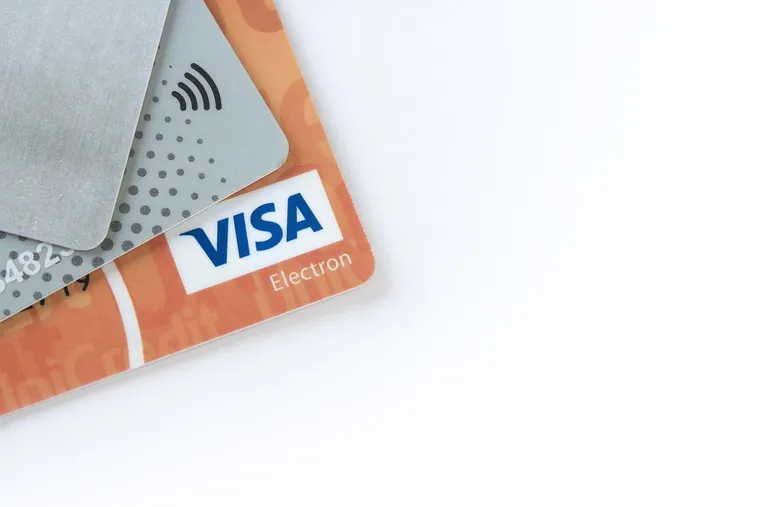
How buying crypto with a card works in Israel
Buying crypto with a card looks like any other online purchase: choose an amount, enter the card, confirm. The difference is what happens before and after. Before, the platform has to verify who you are, because anti-money-laundering rules require it. After, your card company decides whether to approve a charge from a crypto exchange, often in a foreign currency.
The card can be a credit card from Isracard, Max or Cal, or a debit card from your bank. They are all Visa or Mastercard, which is what exchanges accept. Note that this page is about paying with an ordinary card. A card that is loaded with crypto or earns bitcoin, such as maxBack CRYPTO, is a different subject, covered in our crypto cards guide.
Two routes: an Israeli platform or an international exchange
An Israeli card has two practical destinations. The first is Bits of Gold, licensed by the Capital Market, Insurance and Savings Authority (licence 56716). It accepts Israeli-issued cards only, from ₪500, capped at ₪10,000 a day and ₪100,000 a year. In 2022 Max signed a domestic-clearing agreement with Bits of Gold, so Israeli cards clear there as a local payment rather than a foreign one. The price: a 3.5% card processing fee on top of the service fee, and VAT on all of it.
The second is an international exchange. Our pick for card purchases is CEX.IO, operating since 2013. Israel is not on its list of unsupported countries, so Israeli residents can open an account and verify their identity. It takes Visa, Mastercard, Apple Pay and Google Pay at 0.49% to 4.99% plus a service charge, and lists over 300 coins. On the other hand there is no shekel, charges are in dollars, euros or pounds, and it holds no CMISA licence, like every other international exchange.
| Platform | Cards | Fee | Minimum | Limit |
|---|---|---|---|---|
| CEX.IO | Visa, Mastercard, Apple Pay, Google Pay | 0.49–4.99% + service charge | $20 | $1,000/day on a new account |
| Bits of Gold | Israeli-issued cards only | 1.95% + 3.5% + VAT | ₪500 | ₪10,000/day |
| eToro | Card | 1% + conversion | $10,000 first deposit | By account |
| Coinmama | Credit and debit card | Up to 3.9% | $50 | Not confirmed |
| Bit2C | No cards accepted | — | — | — |
From official websites, 5 October 2026. Coinmama figures from review sites. Approval of any specific Israeli card depends on the issuer and was not confirmed with each one.
There are a few other options, each with its own catch. Kraken sells by card and by Apple Pay or Google Pay in its app, with fees that vary by method; its instant buy costs about 1% plus a spread. eToro accepts card deposits, but its help centre says Israeli residents need a $10,000 first deposit, so it is not a route for small purchases. Coinmama, founded in Israel, sells by card from $50 and sends the coins straight to your own wallet. Bit2C, by contrast, takes no card payments at all, only bank transfers.
Credit card or debit card?
To the exchange it hardly matters: both are Visa or Mastercard. The difference is on your side. With a debit card the money leaves your account almost immediately, so you can only spend what is there. With a credit card the charge goes onto your monthly statement. Either way, the charge appears on your statement under the platform’s name, which is exactly the record you will want to keep.
How to choose? If you want everything in Hebrew, in shekels and under Israeli regulation, you will pay more at Bits of Gold. If you want lower fees, a wide choice of coins and Apple Pay, an international exchange fits, and you accept a foreign-currency charge and a platform without an Israeli licence. For the full comparison, see our exchange ranking.
What a card purchase costs: four layers
The cost of a card purchase is built in layers, and most people only see the first. Layer one is the platform’s fee. Layer two is the spread between the buy price and the market rate. Layer three, on an international exchange, is your card company’s conversion fee on a foreign-currency charge. Layer four, on an Israeli platform, is 18% VAT on the fees.
An example at Bits of Gold: on ₪1,000 by card, the service fee is 1.95%, but there is a ₪43 minimum, so you pay ₪43. The 3.5% processing fee adds ₪35. That is ₪78, or about ₪92 with VAT, more than 9%. On ₪5,000 it falls to about 6.4%: ₪97.50 service fee, ₪175 processing, plus VAT. Pay the same platform by bank transfer and the 3.5% disappears entirely.
An example at CEX.IO: ₪1,000 is about $330. The card fee will be somewhere between about $1.60 and $16.50, plus a service charge shown before you confirm. On top of that, your card company may charge a conversion fee, and every 1% of that fee adds about ₪10 per ₪1,000. We did not check each issuer’s rate, so look up the foreign-currency transaction fee in your card’s price list. If you buy regularly, compare it with a bank transfer, which carries no card processing fee.
Apple Pay and Google Pay
Plenty of Israelis already pay by phone everywhere, and on international exchanges that works for crypto too. CEX.IO accepts Apple Pay or Google Pay from $20 to $1,000 per transaction, at the same fee range as cards. The condition is that your card is already set up in your phone’s wallet. The practical upside: you never type the card number into a website, and the payment is confirmed with your face or fingerprint.
What does not change: the charge is still in a foreign currency, and your card company can still decline it. We found no confirmed Apple Pay or Google Pay support at the Israeli licensed platforms; there you pay by ordinary card, by transfer or by standing order.
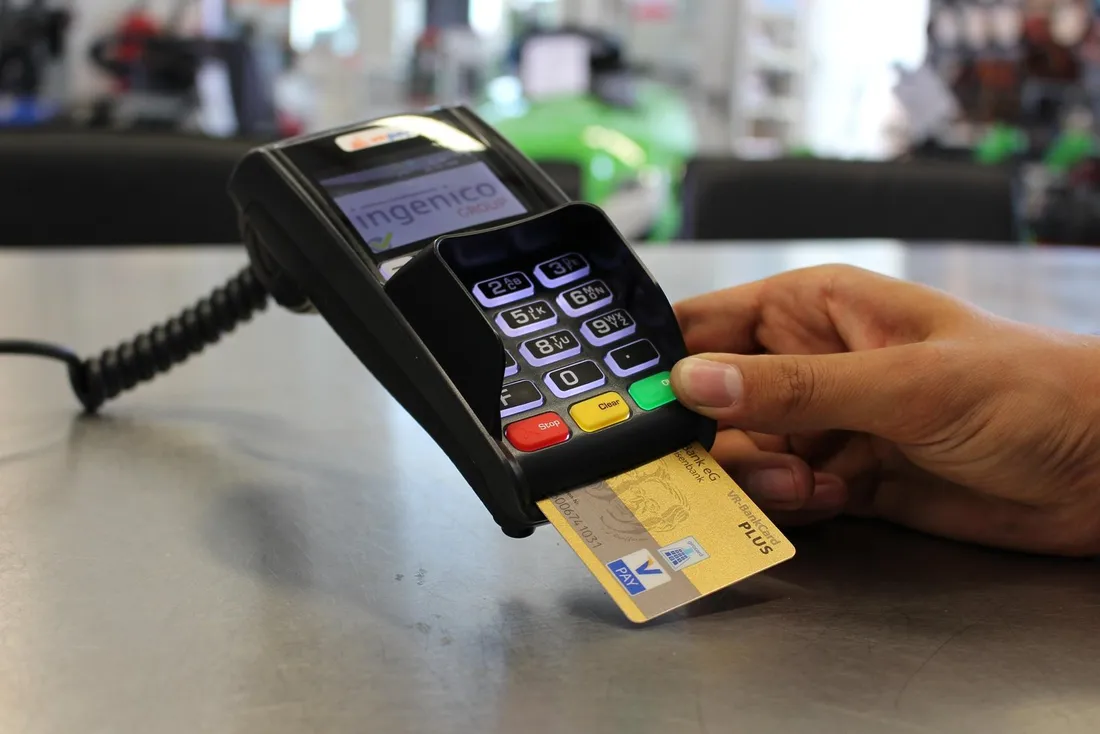
Why your card was declined, and what to do
A decline is the most common frustration with card purchases, and the decision is almost always your card company’s, not the exchange’s. Check these, in order:
- A domestic-only card. Some local-brand Isracard cards do not work abroad. An international exchange needs an international Visa or Mastercard.
- Overseas or online payments switched off. Card companies’ apps usually let you turn overseas payments on and off. Check the setting.
- 3-D Secure. Your card company may ask you to approve the payment with a code or in its app. If you miss it, the payment fails.
- A limit. Your card’s credit limit, the platform’s daily cap (₪10,000 at Bits of Gold) or the new-account limit at CEX.IO.
- A name mismatch. The card must be in your name, the same name you verified on the platform.
If everything checks out and the payment is still declined, call your card company and ask directly. They are not obliged to approve a crypto-exchange charge, and that is their right. If they refuse, the legitimate fix is a different way to pay, such as a bank transfer to an Israeli platform, not someone else’s card or a service promising to “get around” the block.
Your first card purchase, step by step
- Check the card
Make sure it is a Visa or Mastercard that works abroad, and that overseas and online payments are switched on in your card company’s app.
- Sign up and verify
A photo of your biometric ID card or passport, plus a selfie. Bits of Gold accepts an Israeli passport, driving licence or biometric ID.
- Add the card
In your own name only. If you have Apple Pay or Google Pay set up, you can choose it on an international exchange.
- Check the final price
Before you confirm, compare the amount charged with the quantity of coin you will get. This is where the service charge shows up.
- Approve 3-D Secure
If your card company asks for a code or an in-app approval, do it straight away.
- Keep the receipt
Screenshot or download the confirmation. You will need it for your tax return and for your bank when you sell.
That is the whole process. In most cases, once your identity is verified, a card purchase takes a minute or two.
After you buy: where to keep it and how to get out
You have bought. Now two decisions. The first is where to hold it. A small amount can stay on the platform; for anything you would hate to lose, a wallet of your own is better. Withdrawing to an external wallet costs money: 0.95% at Bits of Gold, 0.0005 BTC per bitcoin withdrawal at CEX.IO.
The second is how you will get out. Buy at Bits of Gold and sell there, and the money goes back to your bank on the closed-loop route banks know. Buy on an international exchange and keep every statement: when you sell, your bank may ask where the money came from. It is all in our guides to selling and cashing out and crypto and Israeli banks. And remember that a profit on a sale, or on swapping one coin for another, is subject to 25% capital gains tax.
Pros
- Fastest route: minutes after verification
- Small starting amounts, from $20
- Apple Pay and Google Pay on international exchanges
- No bank transfer needed
Cons
- Dearer than a bank transfer
- Conversion fee on foreign-currency charges
- Card company declines
- Daily and yearly caps
A card is a great tool for the first purchase and for small amounts. If you buy every month, it gets expensive over time, and a standing order or bank transfer makes more sense.
For example, buying ₪1,000 a month by card at Bits of Gold costs about ₪92 each time. With a standing order the stated fee is 1.55% plus VAT.
Frequently asked questions
Can I buy crypto with an Israeli credit card?
Yes. Visa and Mastercard cards from Isracard, Max, Cal or your bank work in two ways: at Bits of Gold, which accepts Israeli-issued cards only, and at international exchanges such as CEX.IO, which charge in dollars, euros or pounds. Either way you verify your identity first, and either way your card company can decline the payment.
How much does it cost to buy crypto by card?
At CEX.IO the card fee ranges from 0.49% to 4.99%, plus a service charge, plus any foreign-currency fee your card company adds for a non-shekel charge. At Bits of Gold you pay a 1.95% service fee (minimum ₪43) plus 3.5% card processing, with VAT on top. On ₪1,000 that comes to about ₪92.
Why was my card declined when buying bitcoin?
Common reasons: a card meant for domestic use only, a block on foreign-currency or overseas online payments, a used-up daily limit, a 3-D Secure check that was not completed, or a cardholder name that does not match the account. Call your card company and ask for the reason, and check the overseas-payment settings in its app.
What are the limits for buying crypto by card?
At Bits of Gold, Israeli cards are capped at ₪10,000 a day and ₪100,000 a year for crypto purchases, with a ₪500 minimum. At CEX.IO, new accounts are limited to $1,000 a day and $3,000 a month for the first three months, and Apple Pay or Google Pay to $1,000 per transaction. Your card’s own credit limit applies as well.
Can I buy crypto with Apple Pay in Israel?
Yes, on international exchanges. CEX.IO accepts Apple Pay and Google Pay from $20 to $1,000 per transaction, at 0.49% to 4.99% plus a service charge, as long as your card is set up in your phone’s wallet. We found no confirmed Apple Pay support at the Israeli licensed platforms.
Sources
- CEX.IO — buy bitcoin: payment methods and fees · checked 5 October 2026
- CEX.IO — fee schedule and new-account limits · checked 5 October 2026
- Bits of Gold — payment methods, minimums and card caps · updated 30 August 2026
- Bits of Gold — what are your costs · updated 30 August 2026
- Calcalist — Max and Isracard move into crypto (Hebrew) · 17 May 2022
Ready for your first coin?
Sign-up and the ID check take a few minutes. Then you can buy Bitcoin, Ether or USDT with a Visa or Mastercard, or with Apple Pay.
It holds no Israeli CMISA licence, and neither does any other international exchange in this guide.