Search for the best crypto wallet in Israel and you will mostly find a list of three brands. The more useful question comes first: who holds the private key? In crypto, whoever controls the key controls the coins. If that is an exchange, you are trusting it the way you trust a bank. If it is you, there is no helpdesk to undo a mistake.
This guide walks through the three kinds of wallet, how to choose between hot and cold storage, which wallets have an Israeli connection or a Hebrew interface, and where to buy a hardware wallet without risking a tampered device. It ends with two topics most wallet guides skip: what an Israeli bank will want to see when you eventually cash out, and what happens to your coins if something happens to you.
Three types of crypto wallet, and who holds the key in each
The first is a custodial wallet: your account at an exchange or broker. Bits of Gold, for example, holds client coins in a managed cold wallet, and on Bit2C your coins sit in your account on the platform. There is no recovery phrase to look after, support is in Hebrew, and if you forget your password you verify your identity and get back in. The downside is obvious. Your coins depend on the company. If it is hacked, shut down or freezes your account, you wait.
The second is a self-custody hot wallet: a phone app or browser extension, such as MetaMask, where the key is generated on your device. You get a recovery phrase of 12 or 24 words, and only that phrase can restore the wallet. Because it is online, it is handy for everyday use but more exposed to malware, fake websites and phishing messages.
The third is a cold wallet, also called a hardware wallet: a small device, about the size of a USB stick, that keeps the key offline. Every transfer is signed inside the device and confirmed with a physical button, so even an infected computer cannot move your coins without your approval. Ledger and Trezor are the best-known brands.
| Exchange wallet | Hot wallet (app) | Cold wallet (device) | |
|---|---|---|---|
| Who holds the key | The platform | You | You, inside the device |
| Forgot your password | Identity check with support | Recovery phrase only | Recovery phrase only |
| Cost | Free; fee to withdraw | Free | Hundreds of shekels |
| Best for | Small amounts, buying and selling | Everyday use, apps | Long-term savings |
| Main risk | Company failure or freeze | Phishing and malware | Lost words or a fake device |
General comparison. Exact terms differ by product; check the maker or platform before you commit.
Hot wallet or cold wallet: how to decide
Our rule of thumb: think of a hot wallet as the wallet in your pocket and a cold wallet as a safe. You do not carry your savings in your pocket, and you do not open a safe to buy a coffee. Someone who bought ₪500 of bitcoin by card to learn how it works does not need a device that costs hundreds of shekels. Someone whose balance would hurt to lose does.
Phone app
- Free and ready in minutes
- Handy for frequent transfers and on-chain apps
- Online, so exposed to phishing and malware
- A stolen, unlocked phone is a real risk
Ledger · Trezor
- The key never leaves the device
- Every transfer approved with a physical button
- Costs money and needs discipline with the words
- Clumsy for daily use
There is also a very Israeli consideration: personal safety. In September 2025 a crypto trader was ambushed in his apartment building in Herzliya, stabbed and forced to transfer bitcoin and USDT worth about $590,000. A hardware wallet does not protect you from someone threatening you in person. So the most important advice here is not technical at all: do not tell people how much crypto you hold, whether on social media, in group chats or to the neighbours.
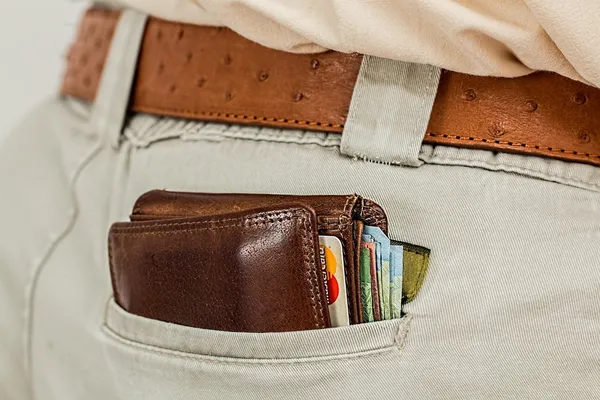
A hot wallet is your pocket. It is always with you and it is convenient, which is exactly why it should only hold what you could afford to lose if your phone is stolen or you tap the wrong link.
Turn on biometric lock, never keep a photo of your recovery phrase in the gallery, and never approve a connection to a site whose address you did not type yourself.
Israeli wallets and Hebrew interfaces: what exists
People who search for a crypto wallet in Hebrew usually want to understand every screen before approving a transfer. Fair enough. In practice, the simplest Hebrew option is the custodial wallet of a licensed Israeli platform: the Bits of Gold app declares Hebrew in the Israeli App Store, and Bit2C runs in Hebrew on the web. When we checked the Israeli App Store listings, none of the international exchange apps declared Hebrew. We could not verify a Hebrew interface for the independent wallets either, so check the language list on the app page.
Zengo is the wallet most associated with Israel. It was founded here, and its distinctive feature is MPC (multi-party computation). Instead of one 12- or 24-word recovery phrase, the key is split into shares kept in different places, and no single share can sign a transfer. If you are worried about losing a sheet of paper with words on it, that is attractive. On the other hand, recovery depends on the company's mechanism and on the backup you set up, so read its documentation before you move a large amount. In Q2 2026 eToro completed its acquisition of Zengo, together with Bit2C, according to eToro's quarterly results. It is worth watching whether the product or its terms change.
MetaMask, Ledger Live and Trezor Suite are international tools with no particular Israeli link. They work anywhere and do not need an Israeli licence, because they are software rather than a service provider holding your money. That cuts both ways: a self-custody wallet is not supervised by the Capital Market, Insurance and Savings Authority, so if something goes wrong there is nobody to complain to.
Where to buy a hardware wallet in Israel
A common Hebrew search is "crypto wallet KSP": people want to pick up a Ledger or Trezor at a familiar electronics chain. That is understandable, but with hardware wallets, where you buy is part of the security. A device that passed through unknown hands can arrive with a "ready-made" recovery phrase in the box, or with tampering you will never spot. A genuine device never comes with printed words. You create them yourself on first use.
- Buy from the maker or an authorised reseller
The official Ledger and Trezor stores sell directly online, and both makers publish lists of authorised resellers. If you buy from an Israeli shop, check it appears on that list.
- Avoid second-hand and marketplace sellers
Used devices, private sellers in Facebook groups and third-party sellers on big marketplaces are exactly where compromised devices turn up. The discount is not worth it.
- Check the packaging and the software
Install the companion app only from the maker’s own website and use it to confirm the device is genuine. If anything looks opened or odd, do not set it up.
- Create a fresh recovery phrase
The device generates the words on first start-up. If the box contains a card with words already printed, it is a fake. Send it back.
For a price benchmark: according to the website of Bitcoin Change, Israel's cash-desk network, it sells hardware wallets through an Israeli reseller, listing for example the Ledger Nano X at ₪650 and the Trezor Safe 3 at ₪660 as of October 2026. Compare that with the maker's own price including shipping and import VAT before you decide.
The recovery phrase: 12 to 24 words worth everything you own
A recovery phrase, or seed phrase, is a list of 12 or 24 English words that encodes your private key. Anyone who has the words can restore your wallet on any device in the world and move every coin. That is why it is not a password in the usual sense: you cannot change it after a leak without moving all the funds to a new wallet.
Three rules are not up for debate. First, no legitimate party will ever ask for your words: not Ledger support, not an exchange agent, not a "recovery expert" on Telegram. Second, do not photograph them, store them in the cloud, send them to yourself on WhatsApp or type them into any website. Third, write them on paper or stamp them on a metal plate, and keep them somewhere safe from fire and water, ideally in two separate places.
Wallets, the paper trail and your bank
This is the part almost nobody mentions. In Israel the money eventually has to land in a bank account, and the bank will want to know where it came from. Under Bank of Israel Directive 411, a bank may not refuse a customer simply because crypto is involved, but it must assess risk, and above roughly ₪100,000 a year it is expected to examine the source of funds and the coins' trail.
When your coins stay on a licensed Israeli platform the whole time, that is a "closed loop", and banks know the route. Bits of Gold even issues a signed certificate for it. The moment you withdraw to a private wallet, you are in an "open garden": the bank will want to see the whole chain, and in complex cases an expert opinion tracing the funds. That does not mean you should avoid self-custody. It means you need to keep records.
- Download a transaction history from every platform you bought on, as CSV or PDF.
- Record your wallet addresses and the transaction IDs (TXIDs) of every transfer in and out.
- When you sell, you can send the coins back to a licensed Israeli platform and sell there. At Bits of Gold, selling coins that arrived from an external wallet costs 1.95% plus VAT, and withdrawing to an external wallet costs 0.95%. On Bit2C a bitcoin withdrawal costs 0.0005 BTC, and a live video ID check is required before any coin transfer.
- Be careful about receiving coins from unknown addresses. In September 2025 Israel's National Bureau for Counter Terror Financing listed 187 USDT addresses it linked to Iran's IRGC, and "tainted" coins can get stuck at an exchange.
If you are planning a sizeable sale, read our guides to crypto and Israeli banks and to selling crypto and cashing out. Moving coins between your own wallets is not a taxable event, but swapping one coin for another is. How crypto tax works in Israel.
Inheritance: what happens to your coins if something happens to you
A self-custody wallet that nobody else knows about is money that can vanish for good. With a bank or an exchange, heirs can come forward with a probate order. With a private wallet, there is nobody to ask. Then again, leave your words somewhere everyone knows about and you have created a theft risk.
The sensible answer for most people is a letter of instructions: a list of your wallets and platforms, where the device is, and where the recovery phrase is stored, without writing the words themselves in the letter. Keep it with a lawyer, in a safe deposit box or in a sealed envelope with someone you trust. Do not put the words in your will, which passes through many hands. If you hold a large amount, you can look at more advanced setups such as a wallet that needs several signatures, but do that with a professional.
For most Israelis starting out, the custodial wallet of a licensed platform is enough. Moving to a hardware wallet makes sense once the balance justifies it and you have the discipline to keep 24 words on paper.
Self-custody does not excuse you from record-keeping. Quite the opposite: if you hold your own coins, you need more paperwork, because the bank cannot see the chain unless you show it. Our beginner’s guide.
Frequently asked questions
What is the best crypto wallet for a beginner in Israel?
For a small amount, the custodial wallet of a licensed Israeli platform such as Bits of Gold or Bit2C is a reasonable start: there is no recovery phrase to guard and support is in Hebrew. As the balance grows, move to a self-custody app, and for money you could not bear to lose, a hardware wallet such as Ledger or Trezor bought from the maker or an authorised reseller.
What is the difference between a hot wallet and a cold wallet?
A hot wallet is an app on your phone or computer that is connected to the internet. It is convenient for everyday use and more exposed to malware and phishing. A cold wallet is a small device that keeps the private key offline and signs every transfer inside the device. It is slower and less convenient, but suited to long-term savings.
What happens if I lose my bitcoin wallet?
If you lose the device or phone but kept your recovery phrase (12 or 24 words), you restore the wallet on a new device and the coins are still there. If you lose the recovery phrase as well, nobody can restore access. With an exchange wallet, recovery goes through customer support and identity checks instead.
Is there a crypto wallet in Hebrew?
The Bits of Gold app declares Hebrew in the Israeli App Store, and Bit2C runs in Hebrew on the web. We could not verify a Hebrew interface for the popular independent wallets, so check the language list on the app page before installing. Zengo, which was founded in Israel, is now part of eToro.
Will my Israeli bank accept money from crypto I kept in a private wallet?
A bank should not refuse simply because crypto is involved, but above roughly ₪100,000 a year it must look closely at the source of funds. Coins that passed through a private wallet count as an open garden, so you will need to show the whole chain: purchase, transfer to the wallet, transfer back and sale. Keep every statement and address.
Sources
- Bits of Gold help centre: fees and external-wallet withdrawals · Checked October 2026
- Bit2C fee table and coin withdrawals · Checked October 2026
- eToro Q2 2026 results (Zengo and Bit2C acquisitions) · 11 August 2026
- Ledger official site · Checked October 2026
- Trezor official site · Checked October 2026
Ready for your first coin?
Sign-up and the ID check take a few minutes. Then you can buy Bitcoin, Ether or USDT with a Visa or Mastercard, or with Apple Pay.
It holds no Israeli CMISA licence, and neither does any other international exchange in this guide.