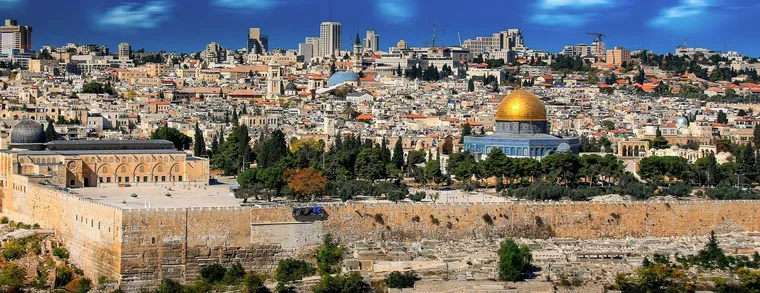
Look for a bitcoin ATM in Jerusalem and you will find exactly one, inside the Bitcoin Change branch at Jaffa Street 151. It is the only crypto ATM in Israel’s largest city, which according to CBS figures quoted on Wikipedia has now passed a million residents. There is no second desk in East Jerusalem, none in Beit Shemesh and none in Modi’in. Anyone in the region who wants to buy or sell crypto for cash ends up at the same address.
That shapes everything else: the pre-Shabbat timetable, and the temptation to use a neighbourhood “change” dealer instead. This page covers the desk itself, what happened in Mea She’arim, what goes on at the Hebrew University, and the options for anyone who lives far from Jaffa Road. Data checked on 5 October 2026.
The Jaffa Street 151 desk: Jerusalem’s only crypto ATM
The branch is staffed, wheelchair-accessible and runs a two-way machine, so you can buy bitcoin, ether, bitcoin cash and USDT with shekel notes, or sell and walk out with cash. Coin ATM Radar lists the unit as Bitcoin Change Jerusalem’s Lamassu, and OpenStreetMap last confirmed the branch in May 2024. The fee is 7% each way, as across the network, and customers are capped at ₪10,000 a day, ₪20,000 a week and ₪30,000 a month.
First-timers need two valid ID documents, an Israeli ID card plus a passport or driving licence, and fill in a short questionnaire. Turn up with a wallet already installed on your phone, because the coins go straight to it; if you don’t have one, staff will help. We found no Jerusalem businesses mapped as accepting bitcoin, so the desk is not just the city’s only crypto ATM but close to its only physical crypto anything.
Shabbat, holidays and the Jerusalem week
Shabbat is felt more strongly in Jerusalem than anywhere else in Israel, and the desk runs to the same rhythm. It closes at 14:00 on Friday, stays shut on Saturday, and the operator lists no opening after Shabbat ends. BTC Map carries slightly different hours, opening at 09:00 and closing at 13:00 on Friday. We go with the operator’s site, but that discrepancy is one more reason to ring ahead, especially on the eve of a holiday.
Shekel bank transfers are credited on business days, so money sent at Friday lunchtime will probably reach the platform on Sunday. If you need cash, say after a sale, plan to collect it by 14:00 on Friday. And if you keep Shabbat and use an app, you can simply schedule your purchases for a weekday: bitcoin trades through the weekend, but you don’t have to.
The Mea She’arim “change” raid: why licensed matters
In November 2024 Maariv ran a piece quoting the head of the police’s Barak division, which handles cyber and crypto intelligence. According to the report, criminal organisations have moved from safes to digital wallets, and in a raid on a “change” money-exchange business in the Mea She’arim neighbourhood, police seized a digital wallet holding $101 million in crypto. It is one of the largest publicised Israeli cases against an unlicensed crypto service.
A separate case from December 2025 makes the same point from the ordinary-money side. A covert operation by the Samaria police and the Modi’in Illit station uncovered an illegal money-exchange operation of about ₪4 million; police seized ₪482,000, $38,000 and €3,400, and carried out searches in Jerusalem together with the Tax Authority. No crypto was involved at all. Still, the gap between a licensed exchange and an unlicensed one is not a technicality.
| Desk that checks ID and reports | Unlicensed “change” | |
|---|---|---|
| ID check | Two documents plus a questionnaire | None, or “just your ID card” |
| Regulatory status | Temporary permit 57960, licence pending | No financial-asset licence |
| Price | 7%, shown on screen | Unknown until you pay |
| Coins you receive | From the machine to your wallet | Possibly from a wallet already under watch |
| If something goes wrong | A receipt and a fixed address | Nobody to turn to |
Permit and licence application per Bitcoin Change’s website. Check the Capital Market Authority register yourself.
The Hebrew University, Har Hotzvim and the Bank of Israel
Jerusalem is not known as a crypto-company town, but the research here goes back a long way. The Hebrew University’s computer science department teaches a course called “The ledger is open: on Blockchain and Cryptocurrencies”, coordinated by Dr Liad Blumrosen; the university runs a fintech unit; and in 2018 the Israel Institute for Advanced Studies hosted a winter school on blockchains and cryptocurrencies. HUJI researcher Aviv Zohar is widely known as a co-author of the GHOST protocol.
The city is also home to the Bank of Israel, which is due to decide by the end of 2026 whether to proceed with a digital shekel; no launch has been decided. The Har Hotzvim tech park hosts companies such as Mobileye and Intel. If you work there and are curious about crypto, a cash desk is rarely the right tool: a shekel bank transfer to a licensed platform costs less and leaves your bank a tidy paper trail.
Tourists, pilgrims and overseas students
Visitors and pilgrims come to Jerusalem from all over the world, and some of them search for “bitcoin ATM Jerusalem” the moment they land. The practical hurdle is the two-ID rule: a tourist with only a passport may not be allowed to buy. The operator has not given us a list of documents it accepts from visitors, so phone before you head up Jaffa Road. If that fails, a card purchase on an international exchange usually works fine from your phone.
Students and yeshiva or seminary students from abroad who receive dollars from home may think of crypto as a way to move it. Before you do, remember that swapping one currency for another is a taxable event in Israel, and that cash from a crypto ATM costs 7% each way. For East Jerusalem residents: there is no desk in the east of the city, so Jaffa Street 151 is the closest.
Beit Shemesh, Modi’in and beyond: what is nearest
Jerusalem serves the whole region, so “nearest” here mostly means “Jaffa Road”. Beit Shemesh and Modi’in have no desk. Beyond the district, the next branches are Rishon LeZion, Rothschild 1, about 45 km in a straight line, and Tel Aviv, King George 50, about 55 km. By road it is further.
If you live in Beit Shemesh or Modi’in, driving into Jerusalem or Gush Dan to pay 7% is usually the worst deal on offer. A bank transfer from home to a licensed Israeli platform, Bits of Gold or Bit2C, costs anything from a fraction of a percent to around 2% plus VAT. Every bitcoin ATM in Israel · Buying with cash · All cities.
If you keep Shabbat and buy regularly, a standing order makes opening hours irrelevant: Bits of Gold offers one at 1.55%, buying a fixed amount from your bank account each month without you opening an app or travelling to Jaffa Road. A normal bank-transfer purchase there starts at ₪750, with a 1.95% fee that falls with volume, plus VAT. At Bit2C you deposit by transfer from an Israeli account in your own name, and placing your own orders on its advanced platform costs between 1.25% and 0.05%. Both pay money back to the same bank account, which is what your bank wants to see. Buying by bank transfer.
Jerusalem is the biggest hole in Israel’s physical crypto map: one desk, closing at 14:00 on Friday, for more than a million people. In a city like that the pull of a neighbourhood “change” is understandable, which is exactly why it is worth resisting.
If you need cash, go to Jaffa Street 151 with two IDs. If you don’t, your phone is cheaper.
Frequently asked questions
Where is the bitcoin ATM in Jerusalem?
There is exactly one: the Bitcoin Change branch at Jaffa Street 151, phone 02-5342313. It is the only crypto ATM in the city, staffed and wheelchair-accessible. You can buy or sell BTC, ETH, BCH and USDT for shekel cash at a 7% fee, up to ₪10,000 a day. Hours are Sunday–Thursday 10:00–19:00 and Friday 09:00–14:00.
Is the Jerusalem desk open on Friday afternoon or Saturday night?
No. It closes at 14:00 on Friday and stays shut on Shabbat, and the operator lists no Saturday-night opening. BTC Map shows slightly different hours, opening at 09:00 and closing at 13:00 on Friday, but we follow the operator’s own site. Call ahead before Jewish holidays.
Is there a crypto desk in East Jerusalem, Beit Shemesh or Modi’in?
No. As of October 2026 there is no crypto cash point in East Jerusalem, Beit Shemesh or Modi’in, so Jaffa Street 151 is the nearest for all of them. Outside the city, the next desks are Rishon LeZion (about 45 km in a straight line) and Tel Aviv (about 55 km). Most people in the area buy online.
What happened in the Mea She’arim “change” raid?
According to Maariv (November 2024), a police raid on a money-exchange business in Jerusalem’s Mea She’arim neighbourhood seized a digital wallet holding $101 million in crypto. It was action against one business, not a statement about the neighbourhood. The practical lesson is to buy only through a provider that checks your ID and deals with the regulator.
I am a student or tourist in Jerusalem. What is the easiest way to buy crypto?
The Jaffa Street desk asks first-time customers for two ID documents, so a passport alone may not be enough; phone first and ask. Students with an Israeli bank account will pay far less than 7% by bank transfer to a licensed platform. For tourists, a card purchase on an international exchange is usually the quickest fix.
Sources
- Bitcoin Change — branches, hours, fees and limits · Checked 5 October 2026
- Maariv — police: crime groups moved to crypto; $101m seized in Mea She’arim (12 Nov 2024, Hebrew) · Article read in full
- JDN — illegal money-exchange operation uncovered, Modi’in Illit (Dec 2025, Hebrew) · Article read in full
- Hebrew University — blockchain and cryptocurrencies course syllabus · Secondary source
Ready for your first coin?
Sign-up and the ID check take a few minutes. Then you can buy Bitcoin, Ether or USDT with a Visa or Mastercard, or with Apple Pay.
It holds no Israeli CMISA licence, and neither does any other international exchange in this guide.