
The short answer: yes, with conditions
Crypto is legal in Israel. You can hold bitcoin, buy it, sell it, move it to your own wallet and pay with it wherever someone will accept it. What crypto is not is legal tender: no business has to take it and the Bank of Israel does not stand behind it. Israel also has no single "crypto law" yet. Instead several regulators each cover a slice: licensing of service providers, securities, banks, anti-money laundering and tax.
One distinction unlocks the whole picture. Users need no permission at all. Service providers, meaning whoever buys and sells for you or holds your coins, need a licence. And anyone serving the Israeli public without one is committing an offence, as the exchange Bitin found out in 2025.
CMISA and crypto exchange licensing
The legal basis is the Supervision of Financial Services (Regulated Financial Services) Law, 2016. It defines virtual currency as a "financial asset", and anyone providing a "service in a financial asset", such as exchange, brokerage or custody, needs a licence from the Capital Market, Insurance and Savings Authority (CMISA). In practice there is a basic licence and an extended one; the extended licence also covers custody and requires more capital.
The first permanent licences came in September 2022: Hybrid Bridge Holdings received the first, and Bits of Gold became the first operating exchange to be licensed. Hybrid Bridge reportedly stopped operating in October 2024. Only a few more have followed. As of October 2026 two platforms with a permanent licence serve the general public: Bits of Gold (licence 56716) and Bit2C (extended licence 72080, under the name Bitosi eToro Ltd after eToro completed its acquisition in Q2 2026). Altshuler Shaham Horizon and Tectona are licensed too, but serve mainly larger and institutional clients. The cash-desk network Bitcoin Change says on its site that it operates under a temporary continuation-of-activity permit (57960) with a full licence application pending.
We could not query the official licensee register automatically, so these details rest on company disclosures and press reports. Before depositing money anywhere, search the company name in CMISA’s register of financial-asset service licensees yourself.
Enforcement: Bitin and Binance
On 24 March 2025 Capital Market Commissioner Amit Gal ordered the unlicensed exchange Bitin to stop operating immediately and fined it about ₪1.7 million. Bitin’s licence application had been rejected back in 2022 because of a prior criminal investigation into its operator. An earlier episode: in February 2022, after CMISA intervened, Binance stopped marketing to Israelis and all Israel-focused activity, removing Hebrew and shekel support.
Foreign exchanges and Amendment 18
No major international exchange, including Binance, Coinbase, Kraken, OKX, Bybit and CEX.IO, holds an Israeli licence as far as we could find. Israelis use them widely and doing so is not illegal, but Israeli investor protection does not follow you there. On 11 May 2026 the government published Amendment No. 18 to the 2016 law, which would let foreign firms regulated abroad obtain a licence on tailored terms if CMISA is satisfied their home regime is "an adequate substitute". It went to first reading; as of October 2026 we found no confirmation that it passed its final readings. For a practical comparison of platforms, see our exchange ranking.
2026: the rulebook arrives
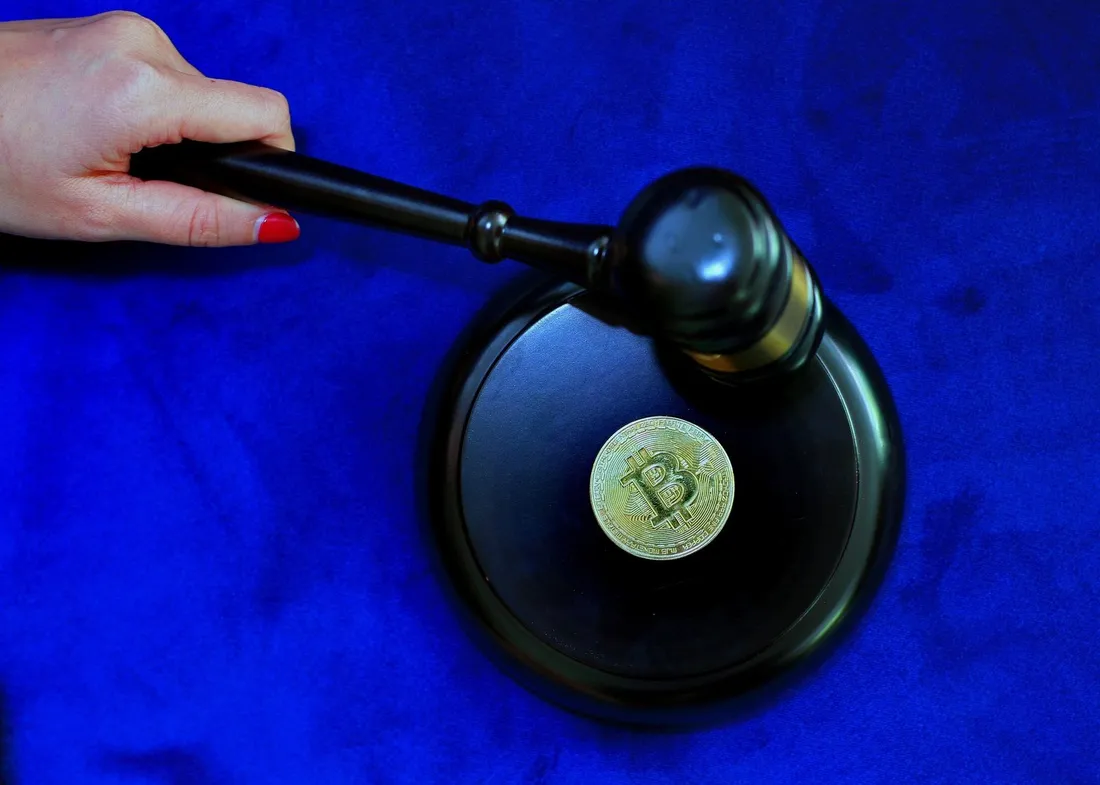
Until 2025, regulation was mostly about who gets a licence. In 2026 it started setting out what licensees must actually do. According to client updates from the law firms Shibolet and Gornitzky:
| Document | Date | What it says |
|---|---|---|
| Own-funds circular | 19 Jul 2026 | Minimum equity ₪2m, or ₪2.5m with custody, plus 0.25% of client assets held. Applies six months after publication, so around January 2027 |
| Custody (safeguarding) circular | Jul 2026 | Client assets in trust and segregated, withdrawals within a reasonable time even in unusual events, a free online personal area and a detailed statement every six months |
| Draft listing-policy circular | 28 Jul 2026 | A coin may be listed only if at least five EU- or New York-licensed firms list it, it has held a market cap above a threshold for six months and it ranks in the top 50. NFTs and privacy coins excluded |
Based on law-firm summaries. Shibolet’s English and Hebrew versions differ on the market-cap threshold currency, so check the circular itself.
What it means for you as a customer: a licensed Israeli platform will have to hold capital, keep your money apart from its own, let you withdraw even on a bad day, and justify every coin it offers. It also explains why the coin range on Israeli platforms is narrow.
The Israel Securities Authority: tokens, funds and warnings
The Israel Securities Authority (ISA) does not issue crypto exchange licences, but it applies the Securities Law, 1968, to tokens that are in substance securities, such as investment tokens offered to the public. In January 2023 the ISA, chaired by Anat Guetta, published draft amendments to bring "digital assets" held for investment under securities law, while leaving currency-like assets such as bitcoin outside. A later draft proposed a new term, "digital investment asset". As of October 2026 we found no sign the amendment has been enacted.
The ISA also cleared the six bitcoin-tracking mutual funds that began trading on 31 December 2024 (from Ayalon, IBI, Meitav, More, Migdal and Phoenix). These are Israeli mutual funds, not foreign ETFs. How they compare with owning bitcoin directly is on our bitcoin fund vs bitcoin page.
On enforcement: binary options have been banned in Israel since 2016–17, and on 23 December 2025 the ISA warned about Pocket Option, an unregulated binary-options site, and opened a criminal investigation into Israelis promoting it. We cover common fraud patterns in our guide to crypto scams in Israel.
The Bank of Israel: banks, Directive 411 and the digital shekel
Proper Conduct of Banking Business Directive 411 was amended in 2022 and took effect on 9 November 2022. Under it a bank may not refuse service simply because money is crypto-related. It must have a risk policy that weighs the type of coin, its anonymity, the service provider and the customer profile, and check the source of funds in depth once crypto activity exceeds about ₪100,000 a year. On 14 July 2026 the Banking Supervision Department published a draft amendment moving "from an automatic-blocking approach to a risk-based approach". Our practical guide is crypto and Israeli banks.
No Israeli bank sells crypto today. On 14 August 2026 Bank Leumi announced plans to offer BTC, ETH and SOL trading in its Leumi Trade app and to PEPPER customers, with Galaxy Digital providing infrastructure and custody, targeted for early 2027 and subject to regulatory approval.
On the digital shekel: the Bank of Israel published a preliminary design in March 2025, and its two-year work plan aims "to reach a decision by the end of 2026" on whether to issue one. Its progress report of April 2026 finds that the expected macroeconomic benefits are likely to exceed the costs. As of October 2026 no issuance has been decided and there is no launch date; headlines about a "2026 launch" are inaccurate.
Anti-money laundering and terror finance
An amendment to the Prohibition on Money Laundering Order, published on 14 March 2021 and in force about eight months later, extended identification and reporting duties to financial-asset service providers. Licensees must know their customers, apply the travel rule (sender and recipient details travel with each transfer), and report to the Israel Money Laundering and Terror Financing Prohibition Authority (IMPA) any transaction of ₪50,000 or more, plus unusual activity.
Separately, the Defence Ministry’s National Bureau for Counter Terror Financing (NBCTF) issues administrative seizure orders on wallets. Between 2021 and May 2023, 189 crypto accounts were seized, most of them at Binance, that it linked to terror groups. In September 2025 the NBCTF listed 187 addresses it linked to Iran’s Revolutionary Guard, which had received about $1.5 billion in USDT. Elliptic noted that some of those addresses may belong to exchanges’ wallet infrastructure.
What this means for you
- A licensed platform will ask for ID, a questionnaire and source of funds, and that is normal
- Large transactions are reported to IMPA
- Coins that passed through flagged addresses can be frozen
What it does not mean
- Holding bitcoin is not suspicious in itself
- A licensee’s report is not an accusation
- If you use a licensed platform and keep records, these rules should not worry you
Stablecoins and BILS
On 29 June 2026 a memorandum of the Supervision of Financial Services (Issuance of Stable Digital Currencies) Law, 5786-2026 was published for comment, modelled on the US GENIUS Act. It would require an issuer licence, ₪2 million minimum equity, 100% reserve assets matching obligations to holders, segregated reserve accounts and redemption rights. It is still a bill under consultation, not binding law. The Bank of Israel had already published principles for stablecoin activity in February 2023.
Meanwhile, on 27 April 2026 CMISA approved the full launch of BILS, Bits of Gold’s shekel stablecoin on Solana, after a sandbox pilot approved in March 2024. Its reserves are held in Israel in designated, segregated accounts.
Cash, payments and tax
Under the Law for the Reduction of the Use of Cash, since 1 August 2022 a cash deal with a business is capped at ₪6,000 and a cash deal between private individuals at ₪15,000. Splitting a deal to get under the cap is itself banned. That applies to any cash purchase of crypto, whether at a change desk or from a private person. The full explanation is in our guide to buying crypto with cash.
The Regulation of the Engagement in Payment Services and Payment Initiation Law, 2023 took effect in June 2024 and created tiered licensing for payment services, e-wallets and remittances, supervised by the ISA. For crypto it means a firm taking card or wallet payments in Israel may need a payments licence on top of its crypto licence. As for tax: under Income Tax Circular 05/2018 crypto is property, and gains are subject to 25% capital gains tax for individuals. Details in our crypto tax guide.
Israel neither bans crypto nor promotes it; it regulates the middlemen. Buy through a licensed provider, keep your records, and you are on the comfortable side of every rule on this page.
Buying on an international exchange is not breaking the law, but the protection, the paperwork and the bank’s questions all become your responsibility.
Timeline: crypto regulation in Israel, 2016–2026
- 2016Financial Services Supervision law
Virtual currency defined as a "financial asset"; service providers need a licence. Binary options banned around the same time.
- 2018Income Tax Circular 05/2018
Crypto is property, not currency; gains are subject to capital gains tax.
- Mar 2021AML Order extended to financial assets
KYC, travel rule and reporting of transactions from ₪50,000.
- 2022Binance exits, Directive 411, first licences
February: Binance halts Israel-focused activity. August: new cash caps. September: first permanent licences. November: Directive 411 in force.
- 2023ISA draft, stablecoin principles, payments law
The ISA proposes applying securities law to digital assets; the Bank of Israel publishes stablecoin principles; the Payment Services Law passes.
- 2024BILS sandbox and bitcoin funds
March: BILS pilot. June: payments law in force. 31 December: six bitcoin mutual funds start trading.
- 2025Bitin closed, digital shekel design
March: preliminary digital shekel design and Bitin shut down with a ~₪1.7m fine. September: 187 addresses linked to the IRGC listed.
- 2026The rulebook year
BILS approved (April), Amendment 18 at first reading (May), stablecoin bill memorandum (June), Directive 411 draft and the capital, custody and listing circulars (July), and a digital shekel decision due by year-end.
Frequently asked questions
Is crypto legal in Israel?
Yes. Holding, buying and selling bitcoin and other coins is legal in Israel. Crypto is not legal tender, so nobody is obliged to accept it as payment. The licence requirement falls on service providers: an exchange, broker or custodian serving the public needs a licence from the Capital Market, Insurance and Savings Authority under the 2016 Financial Services Supervision law.
Which crypto companies are licensed in Israel?
For retail customers: Bits of Gold (licence 56716) and Bit2C (licence 72080, legally Bitosi eToro Ltd). Altshuler Shaham Horizon and Tectona are also licensed, mainly for larger and institutional clients. Bitcoin Change operates under a temporary continuation permit (57960). We could not machine-check the official register, so search it yourself on the CMISA site.
Can I legally use Binance, Kraken or another foreign exchange?
Using one is not prohibited and many Israelis do. But no major international exchange holds an Israeli licence, so Israeli investor protection does not apply: if something goes wrong, the rules of the country where your contracting entity is registered apply. A bill to let foreign firms obtain a tailored licence passed first reading in May 2026 and has not been enacted.
What is the status of the digital shekel?
The Bank of Israel is running a two-year plan aimed at deciding by the end of 2026 whether to issue a digital shekel. Its April 2026 progress report says the expected benefits are likely to exceed the costs. As of October 2026 no issuance decision has been made and there is no launch date.
Can an Israeli bank refuse money that came from crypto?
Under the Bank of Israel’s Directive 411, a bank may not refuse simply because funds are crypto-related. It must assess the risk and check the source of funds in depth once activity exceeds about ₪100,000 a year. A July 2026 draft pushes banks further towards a risk-based approach. In practice a bank can still refuse when documentation is missing.
Sources
- Capital Market, Insurance and Savings Authority · checked October 2026
- Israel Securities Authority · warnings and publications
- Bank of Israel — Digital Shekel Progress Report 2025 · April 2026
- Israel Money Laundering and Terror Financing Prohibition Authority · AML Order
- National Bureau for Counter Terror Financing · seizure orders
Ready for your first coin?
Sign-up and the ID check take a few minutes. Then you can buy Bitcoin, Ether or USDT with a Visa or Mastercard, or with Apple Pay.
It holds no Israeli CMISA licence, and neither does any other international exchange in this guide.